My Bocconi master's thesis: teaching myself to see leather defects smaller than a needle point, then engineering the imaging, tiling, and error analysis that took a YOLO model from unusable to 0.91 precision.
Setup
This was my master's thesis at Bocconi. A top luxury house wanted to automate defect detection on leather hides, a job that took an expert operator 10 to 20 minutes per hide and could only be done by experts.
The starting point was, realistically, almost nothing:
no historical data and no images,
no rig or machinery to capture data,
no clear idea of how to approach the problem,
and hides that were nothing like one another.
What they needed was closer to a magic wand than an engineering project. On top of that they wanted close to real-time detection, accurate localization, and a model that transferred easily to new hides. The one mercy: they could tolerate false positives, but not false negatives. Those constraints ruled almost everything out and pointed squarely at YOLO.
I had already done defect detection at my startup (AIWAY) and knew vision models well, so my first thought was the naive one: easy. Collect data, annotate, train a YOLO, done.
Why it was hard
That confidence died the moment I saw the leather. The operator laid a 2m by 1m hide on the table, and I genuinely thought it was a clean sample: I could not see a single flaw. He said it was a dirty one, maybe 70 to 100 defects. I thought he was joking.
A hide the operator graded as 'dirty', with dozens of defects on it. Can you spot even one? It took me three months.
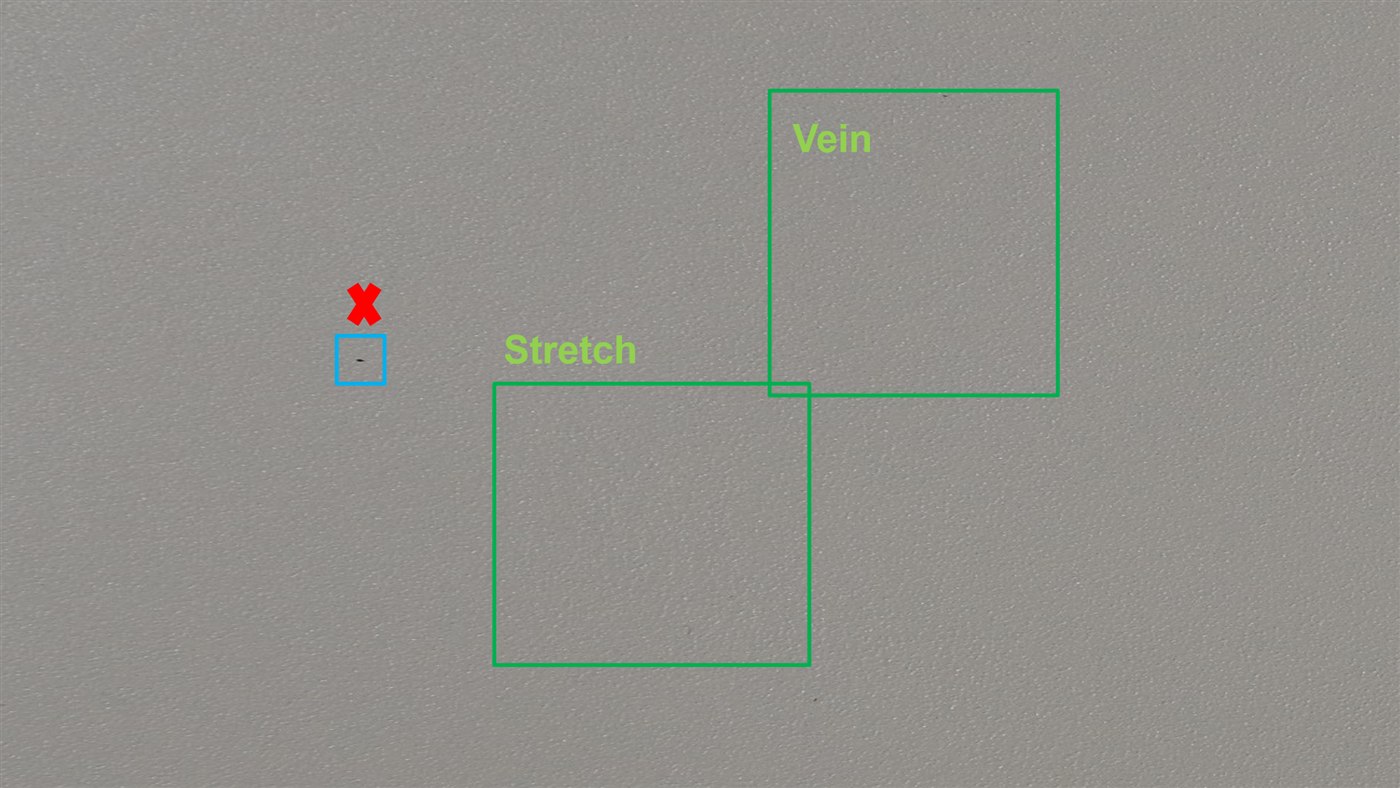
He pointed at what looked like empty leather and I saw nothing. Then he tilted a flashlight at a precise angle and, for a second, a faint abnormal line appeared: a vein. Then a black speck I would have called dust: a "dot", a defect smaller than the point of a needle.
The reveal. The blue box (red X) is just dirt. The green boxes, a vein and a stretch mark, are the actual defects.
That was the humbling moment. Forget YOLO. Before I could teach a model to see these defects, I had to teach myself.
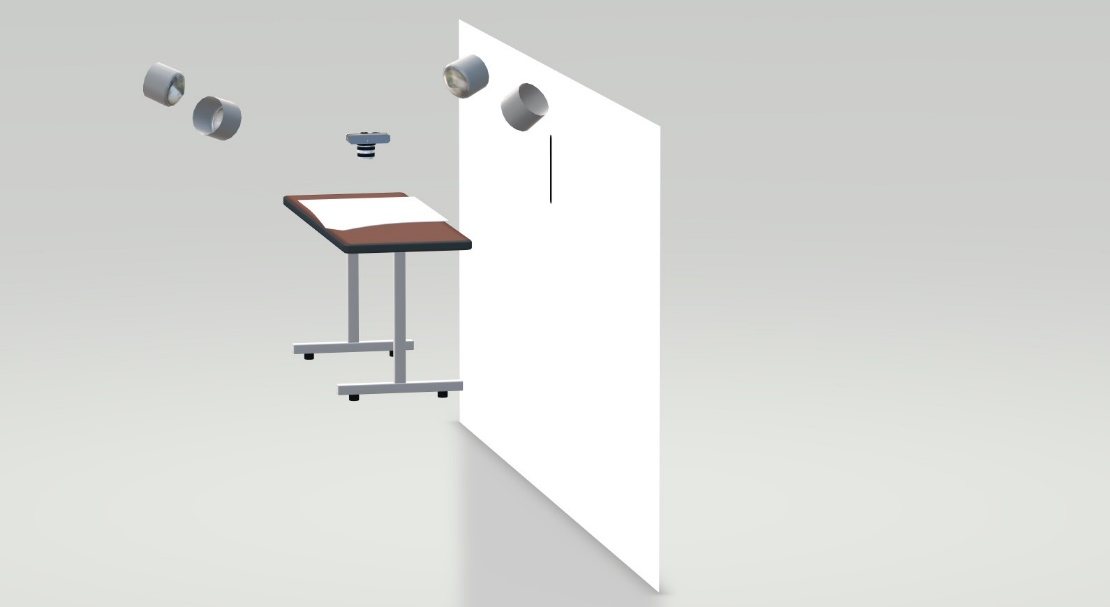
The capture rig we settled on: a matrix camera with four corner lights, tuned over hundreds of trials.
Impact
The thesis was a hit: 0.91 precision and 0.72 recall on defects a layperson cannot even see. The results were strong enough that, a year later, the company came back: the client wanted a standalone product built around it. I took the offer and led that build, which became its own story: Automated Leather Inspection Machine.
Takeaways
You cannot automate a process you do not understand. Months of learning to find the defects by hand was the real unlock, not the model.
Often the breakthrough is a simple reframing, not a fancier model: tiling for resolution, and background images to teach the model what "normal" looks like.
Error analysis beats guessing. Reading 100 predictions by hand told us exactly what to fix when the metrics alone could not.